| Back | |||||||||||||||||||||||||||||||||||||
Ishis I Am Summary |
|||||||||||||||||||||||||||||||||||||
1. Sprouts Of Fate
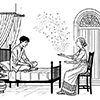
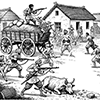
Their close companionship is interrupted when Atrax soldiers attack the town, during which Belili's family disappears without a trace, leaving Ranyu heartbroken. As he matures, his grief transforms into resolve. Training begins for a future resistance, and he becomes a quiet leader among the boys. A mysterious traveller brings urgent warnings of new danger. Meanwhile, Ranyu remains unaware of the greater destiny laid out for him as the future consort king to the High Priestess of Ishis. Eventually, the tense situation forces Ranyu and his mother to flee.
2. Of Power and Oppression
Behind the scenes, Enlil-Zeri nurtures a sinister plan to awaken the demon Kisha through forbidden necromancy. In the streets of Nunur, casual violence against women is met with indifference and reveals deep societal rot. Disillusioned youths like Ku-Ringal and Warad-Shamash begin to question the justice of their world. They are approached by Hanish—secretly Captain Allamu—who recruits them into a budding resistance. Meanwhile, Allamu entrusts a guard named Zabu with a secret mission: to warn the priestesses of Ishis of an impending purge. The chapter intertwines political oppression, social injustice, and the first stirrings of rebellion.
3. The Pearl of the South
As Belili reconnects with the goddess Ishis, she prepares for her transition ritual. Her first bleeding coincides with a temple visit, where the High Priestess greets her with reverence. Both Belili and Ikanum undergo initiation—hers for Ishis, his for Anu—and soon after, they marry with their families' blessing. They begin a joyful life: Belili designs fabrics with Delondra, and Ikanum (now Anu-Lu) takes over his father's trade. Both women become pregnant, and Delondra embraces the worship of Ishis. Their happiness is shattered when Bel Hadita's army attacks Semere. Anu-Lu dies defending the city. Belili escapes, gives birth alone by the canal, but the baby is stillborn. Gravely ill, she experiences a vision of Ishis and is visited by a mysterious manikin offering help.
4. Love Forsaken
Returning to Ornina as Dumu Numa, a warrior of the Goddess, he struggles to reconcile his spiritual path with his human emotions. Jealousy erupts when he sees Shubure with another, ending their relationship in heartbreak. Devastated, he channels his grief into song and decides to join the Resistance. His mother, Ninedinni, gives her blessing. Though Ranyu feels lost, the Goddess Ishis watches patiently, knowing his true journey is just beginning.
5. Alliances and Deceptions
Together, they expose fake Obron tax collectors and return stolen goods to grateful villagers. When a nobleman offers them land in exchange for loyalty, Dumu suspects a trap. His fears are confirmed when the others are captured. With Ubaril’s help, he rescues them using a clever bluff and support from local farmers. After exposing the nobleman's treachery, the group splits: some stay to defend the village, while Dumu, Ubaril, and Aenatarat press on. They rescue a spirited girl, Anatu, who joins them and begins training. As they near Yaggid, the group of four is united, stronger, and ready for what lies ahead.
6. The Shit Fort Siege
Yet dreams stir—a sacred path unfinished. In the shadow of the dreaded Shit Fort, the Nam-ba face a brutal assault. Turon falls, and blood sanctifies the earth as the goddess Ishis manifests, her presence undeniable. Grief and divinity entwine. Dumu and Tiamat marry, but peace proves fleeting. As drought and war return, he heeds destiny's call: to unite the scattered resistances of Samara. With heavy heart and loyal comrades, he sets out—chosen by the gods, marked by sacrifice.
7. Northbound
In a hidden Mashel village, an ancient seer named Menya reveals a vision: Belili once bore the essence of a celestial goddess, guardian of life and balance. Shaken, she questions who she truly is. At the forge of Flimbul, a revered smith, Belili receives a blade—Belbarel—infused with earth-magic and shaped by will and wonder. She trains to wield it as sword and wand alike. Though the village offers peace, destiny calls. As she departs with Yuxo, she vows to protect him, sensing their fates are bound by divine threads—and looming trials.
8. Hellbound
When Anatu is captured during a scouting mission, Dumu Numa calls upon the Goddess. Ishis answers. In a blaze of divine fury, he leads a raid on the enemy fort, slaying three sorcerer priests. The cost is heavy, but purpose deepens. A dream of an empty throne awakens a longing after something lost and forgotten. Guided by Aea, he undergoes the initiation of death and rebirth, facing seven underworld trials. Stripped of all illusion, he is remade by Ishis. Emerging transformed, Dumu Numa is declared the prophesied leader of Samara—chosen, tested, and reborn in the name of the Goddess.
9. Crossings
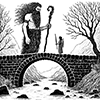
At Qingu’s Crossing, they face the fallen god himself—vast, sorrowful, and raging. Belili meets him with calm strength and elemental power. Awed, Qingu yields, granting safe passage. But the shadow of fate lengthens. In the wild beauty of the land, their love deepens. Belili’s magic reaches new heights as she channels music through the trees. Yet peace is shattered by bandits. Belili triumphs—but Yuxo falls. Her grief is boundless. Alone, she travels on, her spirit numbed. At the First Bridge into Obron, surrounded by enemies and empty of strength, she lays down her weapon, ready for whatever comes.
10. Ominous Silence
The "Nam-ba"—Dumu Numa, Anatu, Ubaril, and Aenatarat—grow into a formidable fellowship. Sensing a strange calm in enemy movements, they set out across Sheye disguised as travelers. The Goddess sends them to seek the hidden Mashel. At Qingu’s Crossing, they find no trace of the old god's spirit—only the husk of forgotten divinity. In the fields near Emtoshi, they strike swiftly against a hidden Obron patrol. Yet the captives know nothing of their isolation. With the land eerily quiet and questions multiplying, the Nam-ba split to scout—on the edge of revelation, shadow, and destiny.
11. The Mashels
Guided by omens and the eagle’s cry, Anatu finds and frees him—but they are seized again by outlaws led by Blood-Citu, once Dumu’s childhood friend. Their reunion stirs old loyalties, and Citu agrees to join the Resistance, with conditions. Anatu, fierce and steady, earns the gang’s respect. Meanwhile, Aenatarat reaches the enchanted Mashel swamps and is welcomed by a secretive people led by the seer Chynata. When Dumu arrives, she recognizes him as the one sent by Ishis. With war looming and prophecy stirring, the Mashel agree to rise—ancient magic joining mortal cause. A new alliance is born.
12. A Strategic Gambit
The message is carried by Ninhursag, her swift and clever handmaid. Pursued and nearly caught near the Third Bridge, Ninhursag evades capture through cunning. In Ishtarat, she learns Dumu Numa has vanished into the south. Aea offers a cryptic prophecy, and Ninhursag follows the river, invoking the ancient name Belixti. At Flimbul’s forge, she delivers her warning; the smith sends word to Dumu Numa in the swamps. There, Dumu proposes a bold plan: evacuate the land, scorch the earth, and draw the enemy into illusion and ambush. Though the elder Chynutu resists, Chynata sees the hand of the Goddess. Alliance is forged; resistance is reborn. Yet Dumu’s dreams grow darker—a windowless room, blank tablets, an eagle’s distant cry. Before departing, he asks Chynata to guide him to settlements linked to the Red Lady. With new allies, he turns north, into fate’s unfolding path.
13. The Crown of Thorns and Lilies
There, in a humble throne room, Queen Sybella reveals Belili’s forgotten truth: she is destined to become the Supreme High Priestess of Ishis. Though disoriented and heartbroken, Belili begins to remember—childhood fragments, divine echoes, the pull of her path. Through sacred rites, she is reborn: bathed, sealed in a sarcophagus, awakened by vision. She drinks from the life-chalice, raises Belbarel, and beholds a blooming pomegranate tree. In the final ritual, she commands the elemental dance, earning the crown of thorns and lilies—beauty wreathed in sacrifice. In her chamber, Belili gazes upon the garden of her transformation and the circling eagle above. She embraces her dual nature—mortal and divine—and feels the weight of destiny settle with grace. The road ahead is clear, and she is ready to walk it.
14. Tension Building Up
Meanwhile, Dumu Numa and Anatu travel the land, uniting resistance cells and stirring hope. Along the Nagina, tales of the Red Lady echo—last seen with Yuxo. Her story troubles Dumu Numa, echoing his own visions of an eagle and a cradle beyond a river. At Flimbul’s forge, he learns her blade is a wand in sword-form, crafted with divine intent. His own weapon is revealed as a sacred relic of Ishis. Northward, Queen Sybella helps Belili recover lost memories through ritual and reflection. A sign from the Goddess—a soaring eagle—hints at a love lost and a destiny shared. Painful truths must surface for Belili to fulfill her calling. Across Samara, the threads of war, prophecy, and memory tighten. As each soul nears their trial, the wind itself holds its breath before the storm.
15. The Eagle and the Doe
Back in Ishtarat, Dumu is welcomed by the Mashel. Mudun presents him with a feathered helm—eagle-adorned, sacred—honouring him as the prophesied one. In the temple, Aea speaks of Queen Sybella’s growing influence in exile and the elusive Red Lady at her side. That night, Dumu dreams of a figure across a vast plain, an eagle between them, flying north. He wakes weeping, sensing destiny approaching. In Lagash, Belili remembers: Ranyu, the boy from Ishtarat, the Widow’s son, lost and sacred. Visions of a white doe and an eagle guide her deeper into memory. She begins to believe Ranyu still walks the world. As Humwawa’s army falters—confused, demoralized, haunted by illusions—resistance strikes flare. In Ornina, Shubure dies in fire and song, her sacrifice echoing through the land. Citu and his rebels prepare for battle. Dumu Numa waits, the land hushed with omen. The storm gathers. The reckoning nears.
16. The Death of Kisha
In Ishtarat, Dumu Numa and the Nam-ba prepare for war. Plans are made to strike Nunur via Ishala-Uruk, but a dark force on the plains must first be faced. Led by a white doe—an omen—Dumu, Anatu, and the others enter the haunted land. There, two mysterious youths, Izdubar and Haldita, speak of a cursed village and distorted time. In a realm of illusion and shadow, the Nam-ba battle madness and monsters. Dumu Numa faces Kisha, the ancient demon raised by Nergal’s necromancer priests. Wracked by visions of despair, he calls upon Ishis, who grants him strength and delivers the final blow. They awaken in silence; the cursed village has vanished, and the path to Nunur lies open. The air hums with prophecy. The last war approaches—and with it, the fate of Samara.
17. The Red Lady Rides
She and Queen Sybella ponder fate’s design, recalling the white doe once sent as a silent prayer. Knowing the hour is near, Belili prepares to act. Meanwhile, Governor Enlil-Zeri dies from a psychic collapse as Kisha perishes. Colonel Maruduk assumes command as Mashel illusions unravel the enemy. Dumu Numa charges the Ishala-Uruk plains, Ushbar raised, Anatu at his side. The Resistance strikes across the Karkaptu River. Then, from the north, Belili arrives in splendor—crowned in light, sword aglow, eagle and white doe beside her. Her coming turns the tide. Maruduk surrenders. In Sybella's tent, Belili and Dumu Numa recognize each other at last—Belili and Ranyu, once children, now reborn. Love rekindles, and plans for the new kingdom begin. Anatu chooses the temple path. In quiet joy, the destined pair prepare for sacred union—their love marking the dawn of a healed world.
18. The Sacred Marriage
Lady Sybella proclaimed the Sacred Marriage to take place at Qingu’s Crossing—once cursed, now redeemed. In the days before, Belili and Hurin fasted and reflected, their longing held in quiet reverence. At sunset, two great processions met by the river. Guided by Aea and Sybella, their vows united Earth and Heaven. Fire and water sealed the rite; the eagle’s cry marked divine assent. Night fell into festival. Friends and allies knelt in reverence—Anatu, Citu, Ubaril, Aenatarat, Aea—all bearing witness. Yuxo’s spirit lingered in Belili’s heart. At dawn, Qingu faded into mist, his time passed. In sacred silence, Belili and Hurin consummated their bond. Their twin children—one girl, one boy—were hailed as the Goddess’s promise fulfilled. A golden age began, born of love, sacrifice, and divine light reborn in mortal form. |
|||||||||||||||||||||||||||||||||||||
| Copyright © 2025 John Hyldgaard | Back | ||||||||||||||||||||||||||||||||||||